Unit studies connect subjects like history, science, reading, and writing around one topic. For our family, they became a way to learn together across different ages, have fun, and discover things we still remember today.
Whether you have one student or eight, you can explore a subject as one family or invite other families to join you.
Every mom needs to find her own groove. Unit studies might not be yours, and that is perfectly fine. But they were one of my favorite parts of homeschooling, and I would love to share why.
Finding Our Family's Groove
When I started homeschooling, my children were 4, 6, 7, and 12. Before that, public school was all I knew.
I asked a friend for guidance, and she recommended Beyond Survival: A Guide to Abundant-Life Homeschooling by Diana Waring.
That book gave me something I really needed: confidence. It didn't tell me which curriculum to buy. It helped me think about what I wanted homeschooling to look like for our family.
I settled on five priorities for the elementary years:
Our family values and our children's character were also non-negotiables. Those priorities helped me make decisions about how we spent our days.
Unit studies gave us a wonderful way to put them into practice.
One Topic, So Many Connections
What I loved about unit studies was how many subjects fit together.
An explorer's voyage became a reason to study geography. Navigation brought in science and math. A question led to reading and research. Writing and presentations gave the children opportunities to share what they discovered.
Learning had a purpose beyond finishing an assignment. We wanted to understand something, figure it out, or try it ourselves.
Two of our units still stand out to me.
Explorers: We Used Compasses, Went Sailing, and Studied the Stars
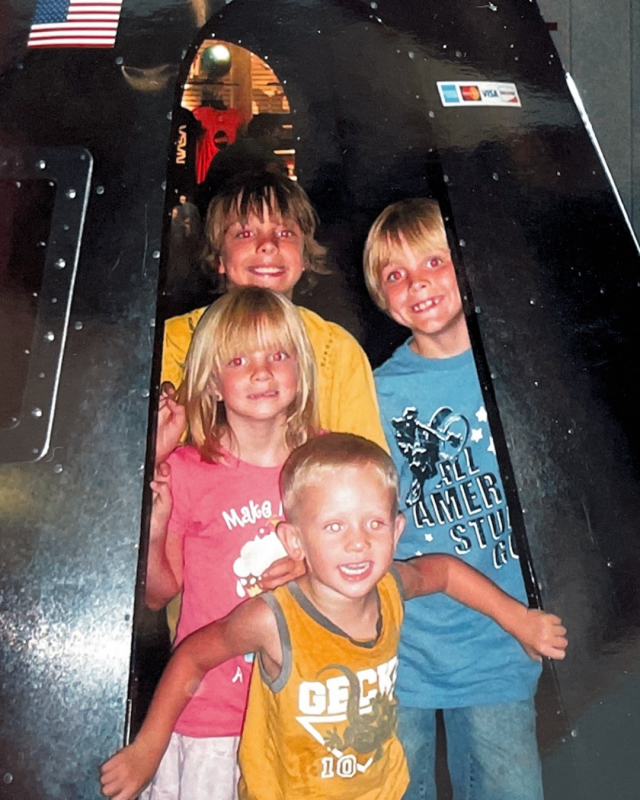
Our explorers unit took us from ancient purposes and use of navigation to current-day purpose and use of navigation of both Earth and space.
We studied the stars. We used compasses. We went sailing. We had a rocket scientist teach some fun technology.
Why did and do people travel? How did people find their way before modern technology? What could they learn from the sky? How did new tools change what was possible?
There was so much to explore:
- History and geography: Explorers, their journeys, the people they encountered, and the places they traveled.
- Science and math: Navigation, stars, direction, distances, and measurements.
- Reading, writing, and presentations: Finding answers, organizing discoveries, and sharing what we learned.
A compass meant something different once we actually used one. Sailing gave us an experience to connect with our reading.
And I was learning right alongside my children.
Birds: Outings, Discoveries, and One Unforgettable Presentation
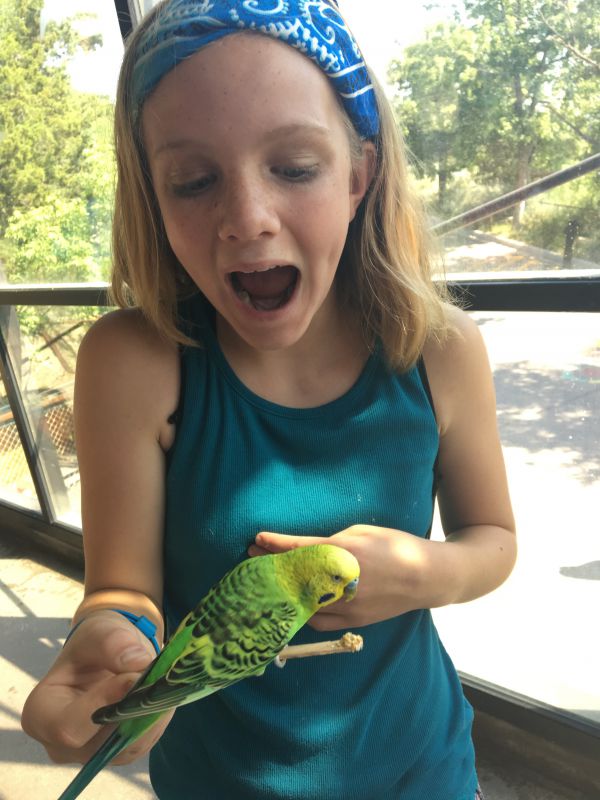
Our birding unit took us to a falconry, an aquarium with a shorebird exhibit, and on multiple outdoor outings to identify birds.
We studied the purpose of different body parts. We learned the importance of quiet in nature to study nature. How does the shape of a beak help a bird eat? What can its feet tell us about where it lives? How do its wings and feathers help it fly?
Again, one topic connected so much:
- Science: Birds' bodies, flight, diet, and behavior.
- Geography: Habitats and migration.
- Math: Opportunities to count sightings, compare wingspans, and organize observations.
- Reading, writing, and art: Identifying birds, researching questions, and recording discoveries.
But the part our family remembers best? My five-year-old's presentation to our co-op.
It included a demonstration of a male bird "shivering" his feathers to attract a female. We all still "shiver" our feathers.
All these years later, that little presentation is still part of our family's shared memories. We learned, and we had fun doing it.
Learning Together at Different Ages
Everyone could explore the same topic without doing the same work.
A younger child might draw a bird and tell me about it. Another might write about its habitat. An older student could investigate migration or the mechanics of flight.
We could learn together while adjusting the depth and expectations for each child.
You can do this with one student, several siblings, or a group of families. You don't need a co-op, but learning with friends can add opportunities for outings, shared activities, using different talents/resources, and presentations.
The amount of togetherness is up to you. Start with what fits your family.
Where Separate Reading and Math Fit In
For our family, unit studies worked alongside structured instruction.
A child learning to read still needs foundational reading instruction and practice. A separate math curriculum provides a sequence for building skills.
Unit studies give children opportunities to use those skills. They read to answer a question, write to communicate a discovery, and use math to solve a problem.
They learn through doing.
What Stayed With Us
For six years, we did unit studies together. Later, my boys continued with independent unit studies during high school alongside some college courses.
My children are all adults now, and I still remember things we learned in those units. So do they.
And I do mean we. I learned right alongside them. We asked questions, made discoveries, and had fun learning together.
All four of my children graduated from our homeschool and chose to attend college. College was their choice, not a requirement of mine. They are all out of college now, but they continue to seek opportunities to learn. Their curiosity and willingness to learn are qualities their employers appreciate, too.
That makes this mom happy.
Learning how to learn and loving learning were two of my hopes from the beginning. It is a joy to see those qualities in their adult lives.
Find What Works for Your Family
You do not have to use unit studies to raise capable students who know how to learn and love doing it. There are many wonderful ways to homeschool.
But for our family, this was amazing.
If you are curious, start with one topic. Gather a few books, think of something to explore or create, and give yourselves room to ask questions. Let each child share what they discover in a way that fits their age and ability.
You might find that you enjoy learning right alongside your children. I certainly did.
Reneé
Homeschool mom of four, all grown up